
Knowledge & guides
Expert agronomic advice, soil knowledge and news from the world of Bluebird.

Rules and requirements for fertilization in organic farming - everything you need to know
The foundation of fertilization in organic farming is the continuous building of soil fertility and increasing organic matter levels.
Read more
Why is autumn the best time to lime a field? Discover the main reasons
Autumn is the optimum time to lime a field because the period after harvest allows acidity to be neutralized and phosphorus to be unlocked before spring.
Read more
What are the symptoms and effects of soil acidification? 4 main warning signs for farmers
The main symptoms and effects of soil acidification are stunted crop growth, weed invasion, yellowing leaves and damage to the root system.
Read more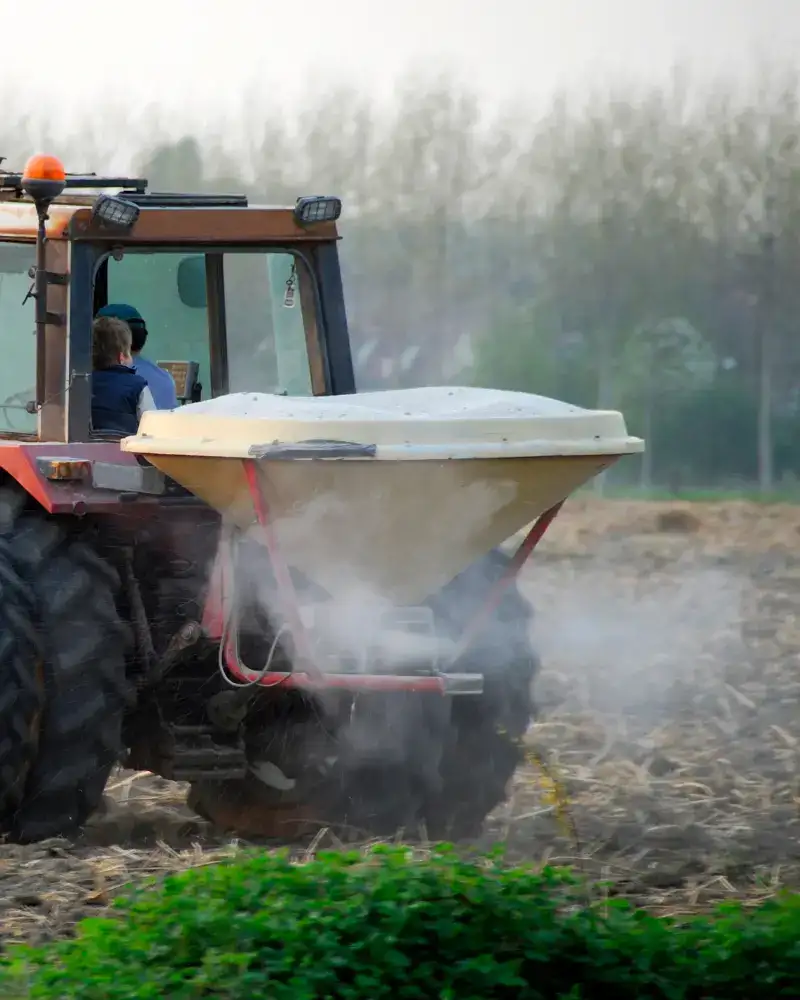
How to set up a fertilizer spreader correctly? Learn the key principles
Setting up a fertilizer spreader correctly requires coordinating the machine's working width, the tractor's forward speed and the physical properties of the granules.
Read more
How and when should you lime soil? Timing, rates and choosing a lime
The best time to lime soil is after harvest, from late summer to late autumn, with rates based on current pH and soil texture.
Read more
Eco-schemes and fertilization — how to plan nutrient management for payments?
Under eco-schemes, fertilization matters most in practices concerning carbon farming and nutrient management.
Read more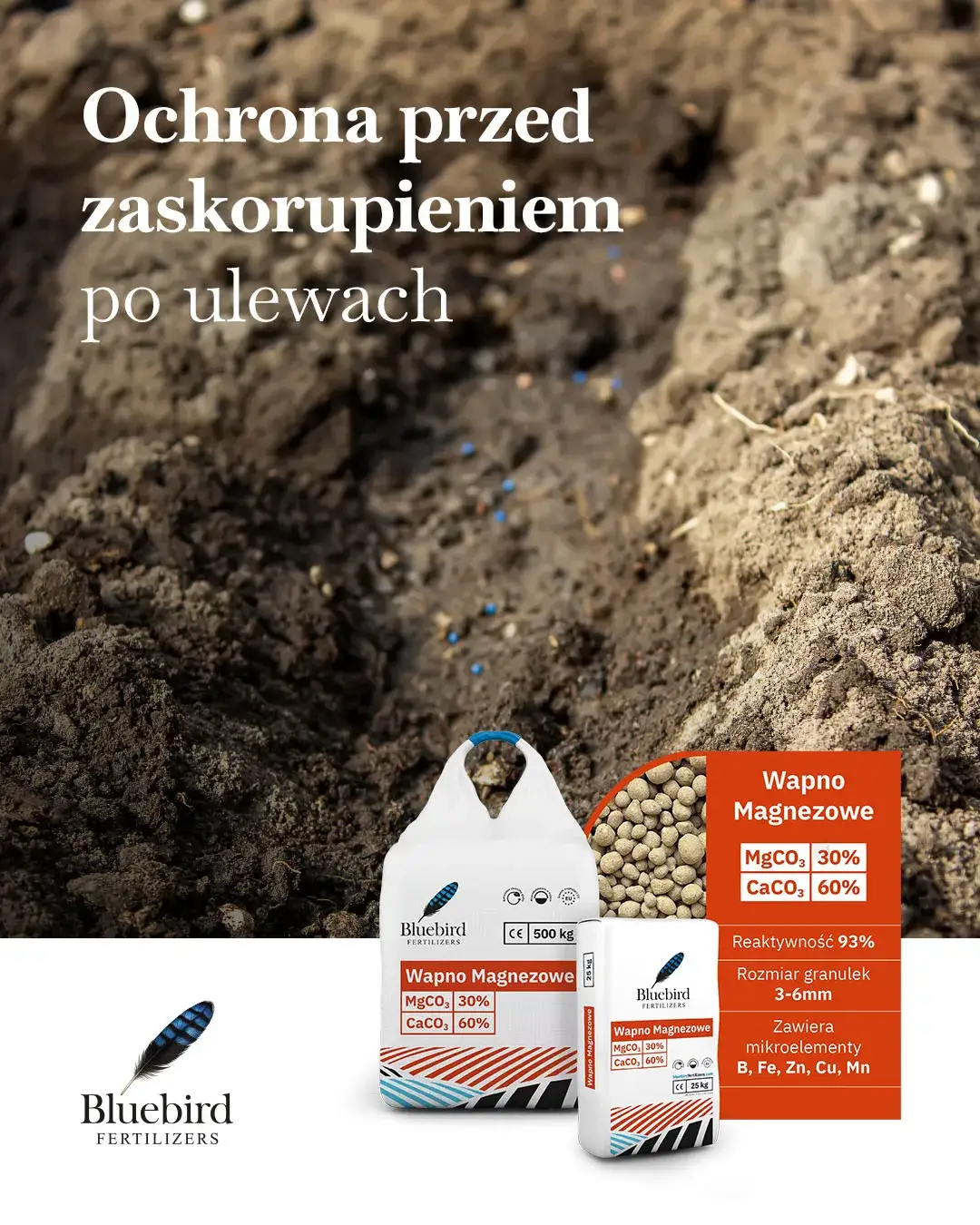
Protecting against soil crusting after heavy rain
After heavy rainfall, poorly structured soils form a compacted crust that suffocates emerging seedlings and blocks air access. Calcium and magnesium rebuild the crumb structure.
Read more
Enough of troublesome dust — clean spreading with Carbonate Lime
Dusty oxide lime means wasted material, uneven doses and uncomfortable work. An even 3–6 mm granule lets you spread precisely, with no dust cloud and no downtime.
Read more
Magnesium Lime — a double benefit in a single granule
One operation, two elements. Calcium regulates soil pH and structure, magnesium drives photosynthesis. Magnesium Lime combines both actions in an even granule.
Read more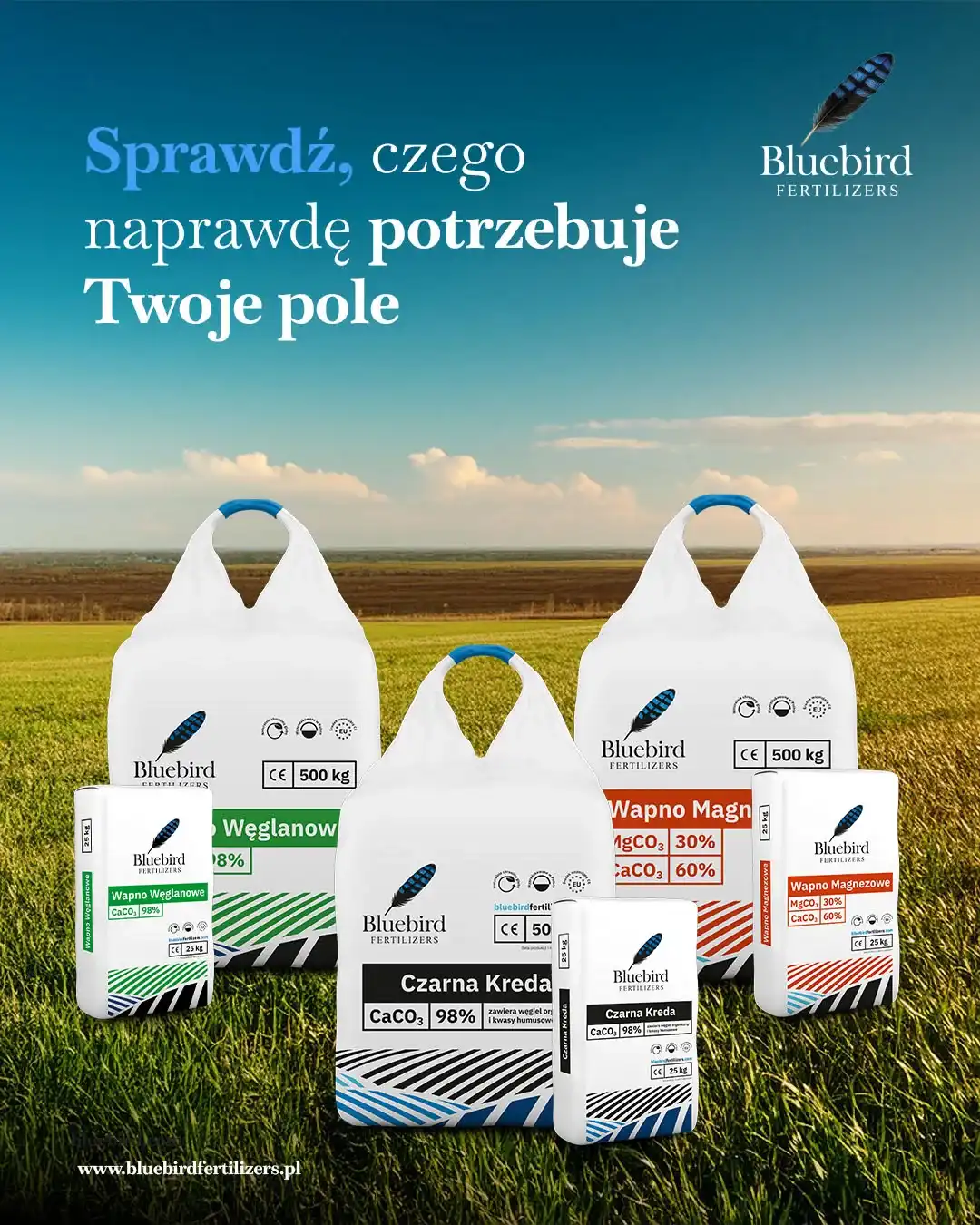
Find out what your field really needs
Fertilising blind is a waste of money. A soil test reveals the reaction and nutrient levels, so you can choose the right fertiliser and dose for the site's real needs.
Read more
Carbonate Lime — the foundation of modern cultivation
Without regulated pH, even the best NPK fertilisation will not work. Regulating the soil reaction is the foundation on which the effectiveness of all agronomy rests.
Read more
Bluebird at the Agrotech 2026 fair — let's meet!
On 13–15 March 2026, the largest agricultural fair in Central Europe will be held at Targi Kielce. Visit the Bluebird stand: Hall 11, Stand A20.
Read more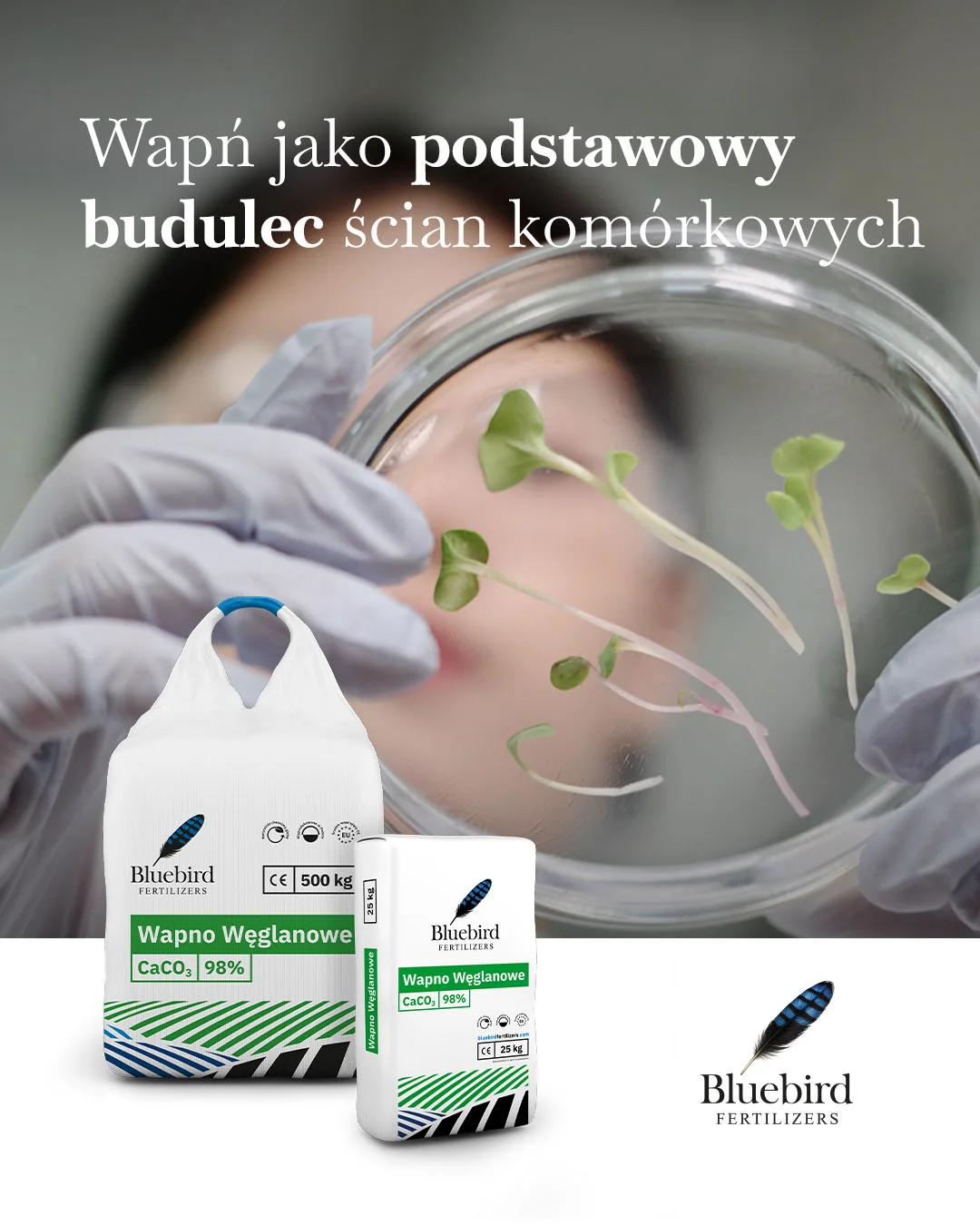
Calcium and the plant — what does soil liming do and how does it affect yield?
Calcium is a building block of cell walls and regulates the plant's water balance. On strongly acidified soils, liming can increase maize yield by as much as several dozen percent.
Read more
Black chalk with humus — how to retain water in the soil during drought?
Increasing humus content by 1% can raise the soil's water-storage capacity by as much as around 150 m³ of water per hectare. Learn how humic acids and lake chalk work.
Read more