
SB 90 - 90% elemental sulfur fertilizer with bentonite for sustained nutrition
90% natural elemental sulfur with gradual release
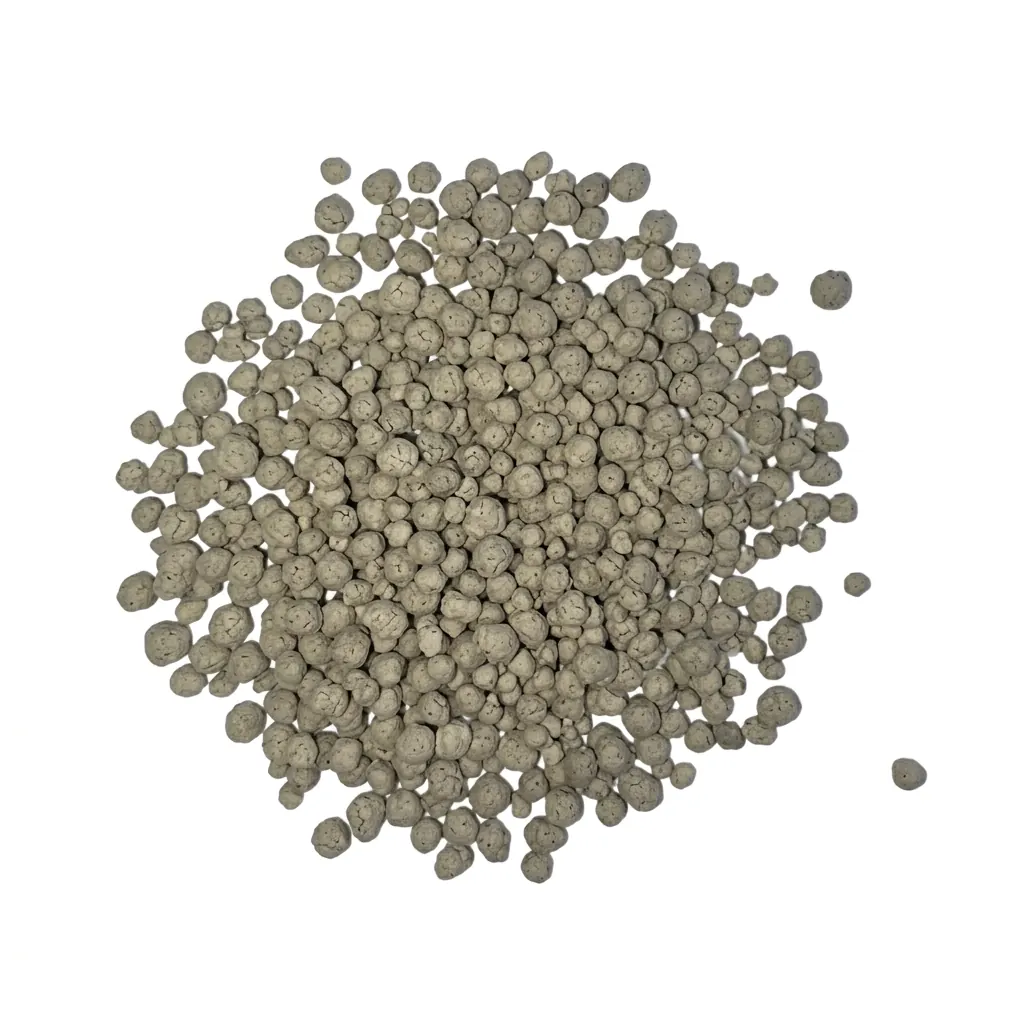
SB 90 is a granulated mineral fertilizer supplying plants with 90% elemental sulfur of natural origin. Bentonite accelerates granule breakdown in moist soil, while varied particle sizes ensure gradual, long-lasting nutrient release.
90% natural elemental sulfur with gradual release
Product parameters
| Total sulfur (S) | 90% |
|---|---|
| Sulfur form | elemental (S) |
| Bentonite | 10% |
| Sulfur raw material purity | 99.98% |
| Granule size | 2–6 mm |
| Physical form | round granules |
| Packaging | 25 kg bag · 500 kg big bag |
| Storage | dry, sheltered place |
Why choose SB 90?
SB 90 is an EU fertilising product (CE), classified as PFC 1(C)(I), a straight solid inorganic macronutrient fertilizer. It is made exclusively from sulfur obtained by underground melting, with a raw material purity of 99.98%.
Bentonite enables rapid granule breakdown even at low soil moisture. Sulfur particles are distributed evenly throughout the root zone, where microorganisms gradually oxidise elemental sulfur into sulfates that plants can absorb directly.
Finer sulfur fractions meet crop demand early in the season, while larger particles form a natural reserve released over the following weeks. This action reduces sulfur losses and leaching risk.
Regular use of SB 90 supports nitrogen use and the synthesis of proteins, amino acids and chlorophyll. The product is intended for all agricultural, horticultural and orchard crops.
- Controlled, long-lasting sulfur release
- Rapid granule breakdown thanks to bentonite
- Improves nitrogen use by crops
- Even spreading with all fertilizer spreaders
Application
See in which situations SB 90 performs best.
Cereals: 20–60 kg/ha.
Oilseed rape: 60–120 kg/ha.
Maize: 30–80 kg/ha.
Sugar beet: 40–100 kg/ha.
Potatoes: 30–80 kg/ha.
Vegetables: 40–100 kg/ha.
Orchards and berry plantations: 30–80 kg/ha.
Frequently asked questions
Practical answers about this product. Match rate and timing to the soil test, crop and current product label.
How does bentonite clay accelerate elemental sulfur granule breakdown in soil?
Bentonite absorbs water and helps the SB 90 granule break apart, including under relatively low soil moisture according to the product description. The resulting sulfur particles are distributed in the root zone, while their conversion to plant-available sulfate still takes place gradually.
How do soil microorganisms convert elemental sulfur into plant-available sulfates?
After the granule breaks down, soil microorganisms oxidise elemental sulfur into sulfate forms that plants can absorb. The rate depends on moisture, temperature, particle size, soil biology and contact with the soil, so elemental sulfur is not an instant sulfate source.
Why does elemental sulfur have a lower leaching risk compared to sulfate fertilizers?
Elemental sulfur is initially a solid, sparingly mobile form and is converted gradually by microorganisms, while sulfate is already dissolved and plant-available. The SB 90 description therefore identifies a lower leaching risk, but soil texture, rainfall, rate and management still influence losses.
What is the recommended SB 90 application rate for oilseed rape and cereals?
The listed SB 90 ranges are 60–120 kg/ha for oilseed rape and 20–60 kg/ha for cereals. Choose the rate within the range from the crop's sulfur need, soil conditions and current product label rather than applying one value to every field.
What are the application rates of SB 90 for maize, sugar beet, and potatoes?
The listed ranges are 30–80 kg/ha for maize, 40–100 kg/ha for sugar beet and 30–80 kg/ha for potatoes. The appropriate rate depends on soil and crop need; verify it in the current label before application.
When is the best time in the season to apply SB 90 elemental sulfur?
Apply SB 90 early enough for microbial conversion to sulfate before the crop's strongest sulfur demand, with sufficient soil moisture for granule breakdown. The best timing varies by crop and soil, so follow the current label and crop plan rather than one universal calendar date.
Need technical documentation?
In the Attachments section you will find product data sheets, safety data sheets, EU declarations of conformity and technical specifications available to download as PDF files.